Consulting / Advisory Expertise
Code, accessibility, and senior living — aligned from day one.
Steven H. Ruiz, AIA, NCARB provides high-level advisory services to owners, developers, operators, and design teams focused on building codes, accessibility, and senior living environments. As Architect of Record for over 400 projects, his work integrates building codes, life safety requirements, accessibility standards, and the Facilities Guidelines Institute (FGI) to align design, operations, and licensing.
Senior Living: Aligning Code, Cost, and Care Delivery from Day One
High-level advisory for owners, developers, and operators — integrating building codes, life safety, accessibility standards, and FGI to align design, operations, and licensing. This service supports the design team.
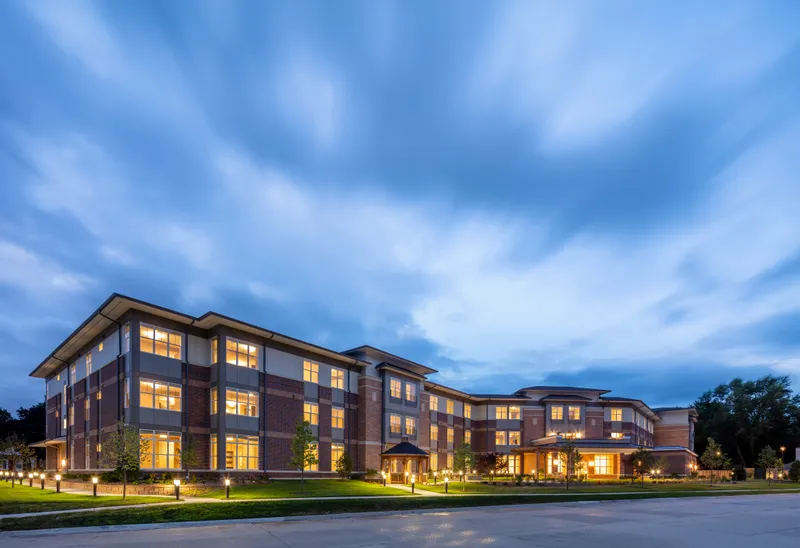
Where Value is Delivered
- Early developer building and site due diligence
- Identification of code, accessibility, and licensing risks
- Reduced redesign, change orders, and construction delays
- Improved clarity in code interpretation across jurisdictions
- Support for smoother Authority Having Jurisdiction (AHJ) and Fire Marshal reviews
- Alignment of design decisions with operational realities
- Independent peer review of architectural documents and code strategies
Services
- Building & Life Safety Code Advisory — IBC, IEBC, NFPA 101 (Life Safety Code)
- Accessibility & Residential Compliance — ADA, FHA, UFAS, ICC A117.1, PROWAG, HUD, and the current FGI Residential Health Facilities guidelines (multiple standards may apply depending on jurisdiction, directly influencing unit layouts, circulation, and site design)
- Senior Living & Licensing Specialty — Assisted Living, Memory Care, and CCRCs with state-specific licensing requirements
- Developer Building & Site Due Diligence — early evaluation of site and building constraints to inform code strategy, feasibility, and development planning
- Peer Review of Architectural Documents — independent review of drawings and specifications to identify code, accessibility, and compliance issues while supporting the Architect of Record
Senior living developments typically include a range of residential and care environments — Affordable Senior Apartments, Independent Living, Assisted Living, and Memory Care — each representing increasing levels of services, operational complexity, and regulatory oversight, from non-licensed residential uses to fully licensed 24-hour care.
Early determination of the development model is critical. It directly informs the appropriate code pathway, which may include Use Groups R-2, R-4, I-1 (Condition 1 or 2), and I-2 (Condition 1). Each classification carries significant implications for:
- Construction type (combustible vs. non-combustible)
- Fire-resistance ratings and life safety systems
- Building height and area allowances
- Licensing eligibility and operational flexibility
These decisions directly impact construction cost, feasibility, and long-term operational strategy. Establishing the correct approach early is essential to align budget expectations with future goals.
A developer sought to construct a three-story Independent Living community with the long-term goal of transitioning to a licensed Age-in-Place model.
- An initial R-2 combustible approach met immediate cost goals but would not support future licensing in most jurisdictions
- Transitioning to I-1 offered a viable intermediate path but introduced limitations based on jurisdictional interpretations of care levels
- Full I-2 classification provided maximum licensing flexibility but required non-combustible construction, significantly increasing upfront cost
Advisory outcome: By evaluating code pathways, licensing requirements, and jurisdictional constraints early, Steven Ruiz guided the developer/operator to a strategic hybrid solution that maintained reasonable initial construction cost, preserved future licensing flexibility, enabled a phased transition to Assisted Living with manageable upgrades, and supported long-term market adaptability and resident and staff retention.
Experience
Get in touch
To discuss a project or learn more about these services, contact Access Green Design Group.